
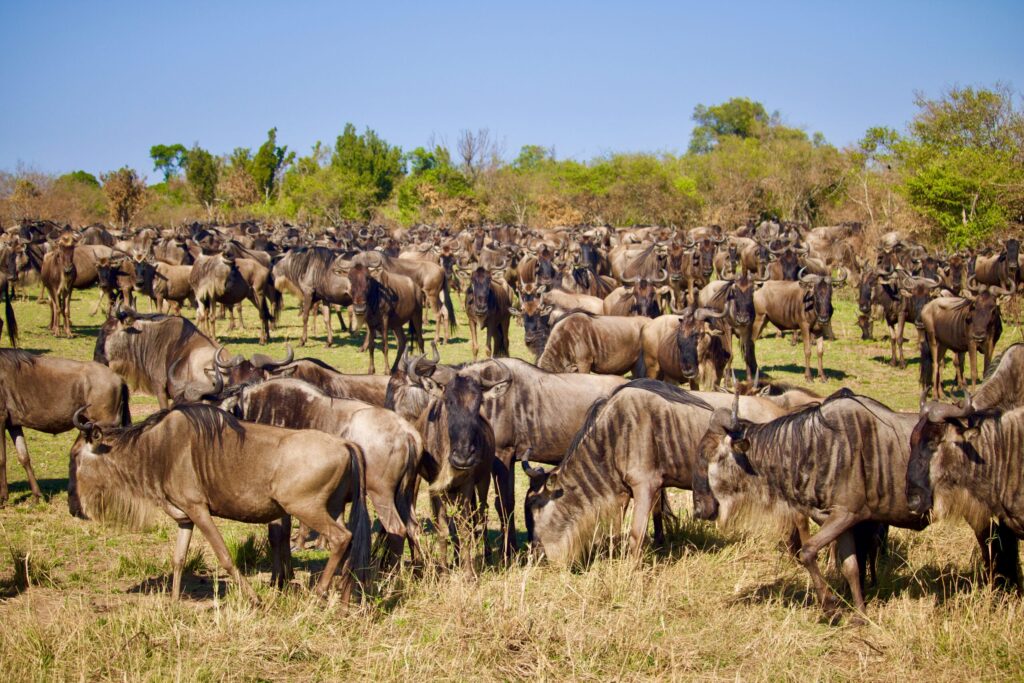
Quick answer: The Great Wildebeest Migration is a year-round movement of over 1.5 million wildebeest, plus zebras and gazelles, between Tanzania’s Serengeti and Kenya’s Maasai Mara. The dramatic Mara River crossings typically happen July to October, making that the best window to witness it.
For many travellers, witnessing this event is a lifelong dream. At Esther Luxe Safaris, we plan expertly guided tours around it, led by knowledgeable local guides.
What Is the Great Wildebeest Migration?
The Great Migration is a year-round cycle driven by rainfall and the search for fresh grass. Herds move continuously between the Serengeti and Maasai Mara, forming one of the largest land-animal migrations on Earth. Its most dramatic moment is the Mara River crossing, where wildebeest leap into crocodile-filled waters while predators wait on the banks — one of the most thrilling wildlife events anywhere in the world.
Migration Timeline: When Does It Happen?
- January–March: Calving season in the southern Serengeti, with thousands of calves born daily.
- April–June: Herds move north through the Serengeti.
- July–October: Famous Mara River crossings and outstanding game viewing in the Maasai Mara.
- November–December: Herds begin returning south to the Serengeti as the rains arrive.
Best Places to Watch the Migration
Maasai Mara National Reserve, Kenya
Famous for dramatic river crossings and exceptional wildlife viewing. During migration season, you may also see lions, cheetahs, leopards, elephants and buffalo. See our Great Migration safari for a ready-made itinerary.
Serengeti National Park, Tanzania
Endless plains filled with wildlife year-round, and the starting point of the migration cycle — explore the Serengeti National Park official site for more.
Wildlife You’ll See Beyond the Wildebeest
- Lions, leopards and cheetahs
- Elephants, buffalo and rhinos
- Zebras, hippos, crocodiles and hyenas
- Giraffes and gazelles
Tips for an Amazing Migration Safari
- Book several months in advance for peak season (July–October)
- Bring binoculars and a camera with extra batteries
- Wear comfortable, neutral-coloured clothing
- Follow your guide’s instructions for safe wildlife viewing
- Stay at least 3–5 days to maximise your chances of seeing a river crossing
Frequently Asked Questions
What month is best for seeing the Mara river crossings?
August and September typically offer the strongest odds of witnessing a Mara River crossing, though exact timing shifts with rainfall each year.
Is the migration guaranteed if I visit in July?
No sighting is ever guaranteed — the herds’ exact location depends on rainfall and grazing conditions — but July through October is consistently the strongest window.
Should I watch the migration from Kenya or Tanzania?
Choose the Maasai Mara for river crossings from July to October, or the Serengeti if your trip falls during the January–June calving and northward movement period.
How many days should I plan for a migration safari?
At least 3 to 5 days, since river crossings happen unpredictably and more time in the reserve significantly improves your chances.
Why Choose Esther Luxe Safaris?
We are passionate about creating unforgettable safari experiences, with experienced local guides, comfortable 4×4 vehicles, tailor-made itineraries, Kenya and Tanzania safari packages, competitive prices and 24/7 customer support.
Contact Esther Luxe Safaris today and let us help you plan your dream Great Migration safari.