Nairobi to Maasai Mara: Road Transport vs. Fly-in Safaris (Cost Comparison)
Quick answer: The journey from Nairobi to Maasai Mara takes about five to six hours by road or roughly 45 minutes by air. Driving costs less overall, and it shows you the Great Rift Valley on the way. Flying costs considerably more, but it saves most of a day and suits visitors with limited time. Many travellers drive one way and fly the other.
The Maasai Mara lies roughly 270 km south-west of Nairobi. How you cover that distance shapes the first and last day of your safari as much as any game drive. In this guide, we compare the two main options for Nairobi to Maasai Mara transport, so you can choose with your time and budget in mind.
Nairobi to Maasai Mara by Road: What to Expect
Most road transfers leave Nairobi early in the morning. You travel in a 4×4 safari vehicle with a pop-up roof, so you can stand and look out along the way. The drive takes around five to six hours, depending on traffic, road conditions and your final camp.
The route crosses the Great Rift Valley, where you can stop for views over the valley floor. Next, you pass through farmland and small towns, including Narok, the last major stop before the reserve. Most of the road is now tarmac. However, the final stretch to some gates and camps is rough, dusty and slow.
Leave Nairobi by about 6:30 am to beat the city traffic. Pack water, snacks, a light jacket and sunscreen, and keep your camera within reach. The Rift Valley viewpoints make excellent photo stops.
Many operators plan a lunch stop along the way. Because of this, you arrive in time for an afternoon game drive if you leave early enough.
Nairobi to Maasai Mara by Air: What to Expect
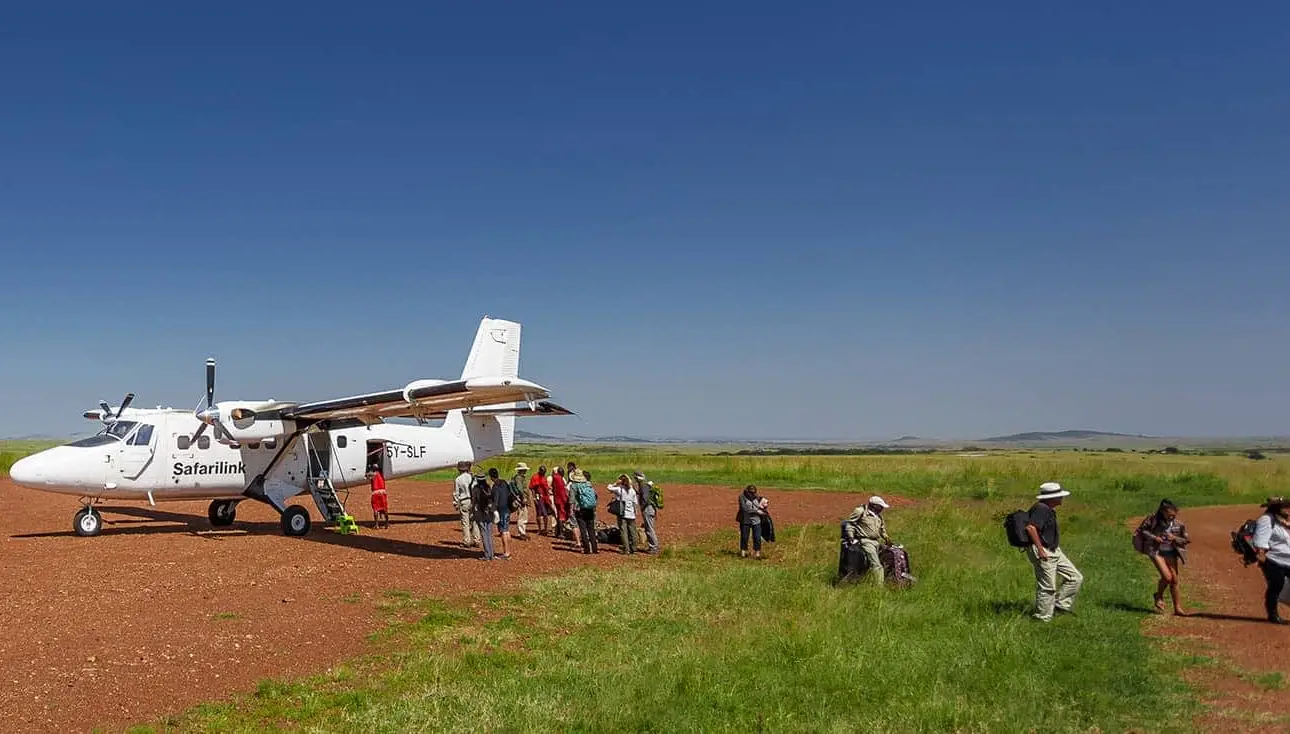
Scheduled light aircraft connect Nairobi’s Wilson Airport with airstrips in and around the Mara, including Keekorok, Musiara and Ol Kiombo. Operators such as Safarilink and Air Kenya run these flights. The flight takes roughly 45 minutes, and the views over the Rift Valley and the plains are superb. Flights run in the morning and afternoon, so ask about departure times when you book.
Most camps and lodges include a vehicle transfer from the airstrip. This transfer often doubles as your first game drive. Once you land, our guide to the best luxury safari lodges and camps in the Maasai Mara helps you choose where to stay. You can also read airport details on the Kenya Airports Authority website.
Cost Comparison: Nairobi to Maasai Mara by Road vs Air
Fly-in safaris cost more because you pay for speed and convenience. A seat on a light aircraft simply costs more than diesel and driver time for the same route. Flights typically add a few hundred US dollars per person for the return journey. Fares change by season and airline, so ask for a current quote before you book.
Road transfers usually sit inside your package price, so they rarely appear as a separate charge. Remember that park or conservancy fees apply either way.
| Feature | Road transport | Fly-in |
|---|---|---|
| Typical travel time | 5–6 hours | About 45 minutes |
| Relative cost | Lower | Significantly higher |
| Luggage | Flexible | Soft bags and a weight limit |
| Scenery | Rift Valley views on the ground | Aerial views on approach |
| Best for | Budget travellers and road-trip lovers | Time-limited or comfort-focused travellers |
Time Is the Real Trade-Off
For a short trip, flying can decide whether you gain an extra day of game drives or lose one to travel. A three-night safari shows the difference clearly. Driving both ways uses up most of two days in transit. Flying both ways returns much of that time to the Mara.
For longer trips, the lower cost of the road option often outweighs the time difference. Not sure how long to stay? Read our guide on how many days you need for a Kenya safari. If you plan to visit between July and October, book early, and see our Great Wildebeest Migration guide for timing advice.
Comfort, Road Conditions and Luggage
Some sections of the road are rough, particularly near the reserve. That makes for a bumpier ride than flying. Travellers with motion sickness, back or joint problems, or very young children often find flying more comfortable.
Luggage rules matter too. Light aircraft usually require soft-sided bags and enforce a weight limit, often around 15 kg per person. On the road, you can bring a hard case without trouble. Check your airline’s current rules before you pack, and use our safari packing list to decide what to bring.
Combining Both: Drive One Way, Fly the Other
A popular approach is to drive in and fly out. You enjoy the Rift Valley scenery on the way there, and you save time before your flight home. In addition, this option splits the difference in cost.
Just plan the return carefully. Flights from the Mara usually land at Wilson Airport, not Jomo Kenyatta International Airport. Therefore, leave a generous buffer before any international departure. For a rounded trip, you can also compare the Mara with other parks in our Maasai Mara vs Serengeti guide.
Frequently Asked Questions
Is the road from Nairobi to Maasai Mara safe?
Yes, when you travel with an experienced local driver-guide in a well-maintained safari vehicle. This is standard practice among reputable operators.
Can I see wildlife on the drive?
Occasionally, especially near the reserve boundary. However, the drive does not replace game drives inside the Mara itself.
Is there a luggage limit on fly-in flights?
Yes. Light aircraft enforce a soft-bag limit and a weight allowance per passenger, so pack light.
Which option from Nairobi to Maasai Mara do first-time visitors choose?
It varies. Travellers on shorter trips of under a week more often fly, while those with more time or a tighter budget tend to drive. For extra ideas, browse the Magical Kenya visitor site.
Plan Your Kenya Safari with Esther Luxe Safaris
Not sure which option fits your itinerary and budget? Contact our safari specialists, and we will recommend the best route for your dates and priorities. You can also see our 4-Day Group Joining Great Migration Safari or browse all safari packages.