Lake Nakuru National Park: Rhinos, Flamingos & Birdlife Guide
Quick answer: Lake Nakuru National Park is one of Kenya’s top rhino sanctuaries and a renowned birdwatching destination, historically famous for vast flocks of pink flamingos along its soda lake shores. It’s compact, easy to explore in a day, and pairs well with the Maasai Mara or Amboseli.
Lake Nakuru is one of the most accessible parks on a Kenya safari itinerary, offering strong wildlife density in a relatively small, fully fenced area — a good option when time is limited but you still want a genuine Big Five chance.
Rhino Sanctuary
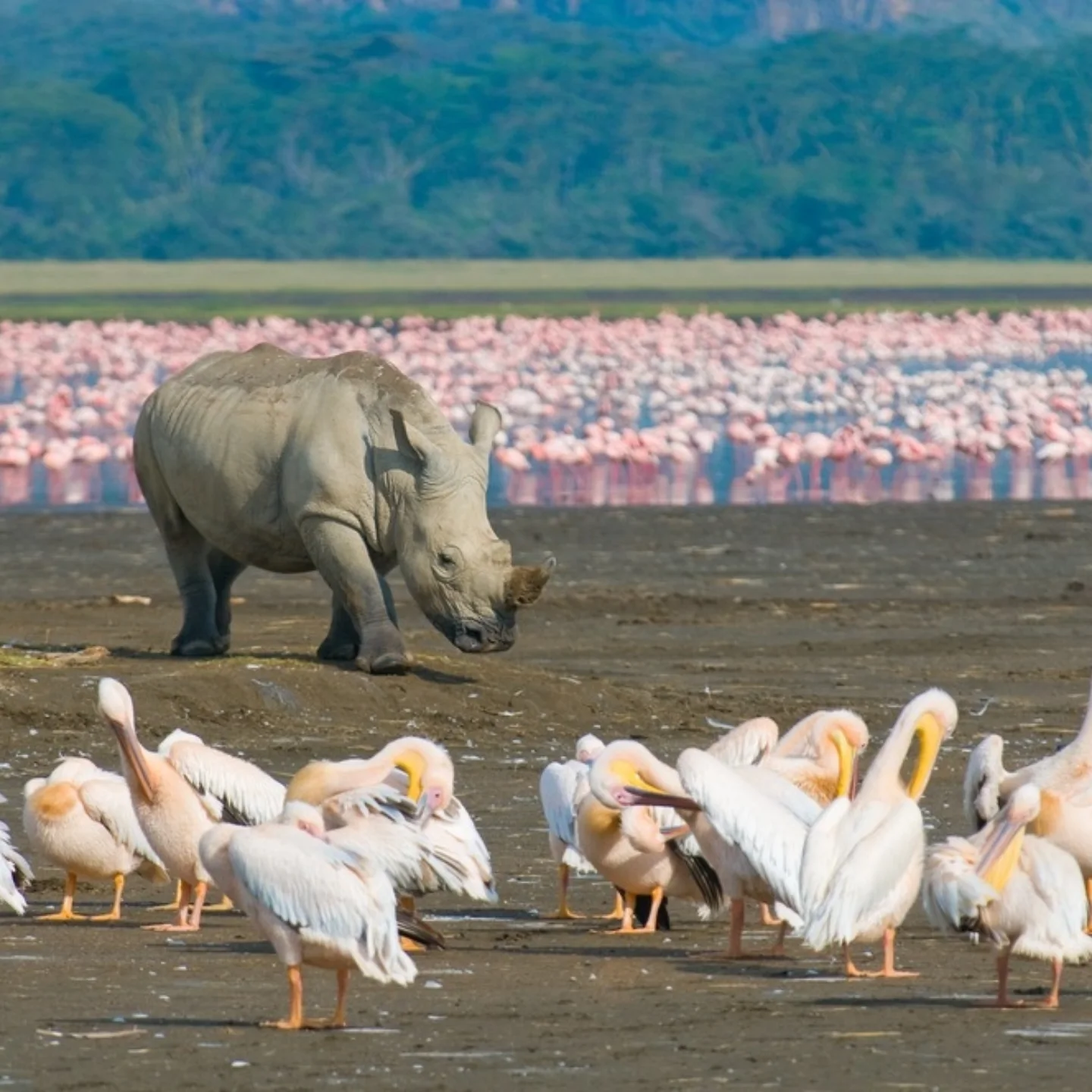
Lake Nakuru is a designated rhino sanctuary, protecting both black and white rhinos within a fenced, closely monitored area — one of the more reliable places in Kenya to see rhinos on a game drive, with sighting odds among the best in the country.
Flamingos and Birdlife
The park has historically hosted enormous flocks of lesser flamingos, though numbers fluctuate significantly with the lake’s water levels and algae supply from year to year, sometimes shifting the birds to nearby Lake Bogoria instead. Regardless of flamingo numbers, Lake Nakuru remains one of Kenya’s best birdwatching destinations, with over 450 recorded species.
Other Wildlife
Beyond rhinos and birdlife, the park is home to Rothschild’s giraffe, lions, leopards, buffalo and healthy plains game populations, plus troops of baboons around the lake’s wooded fringes.
The Lake Itself
Lake Nakuru is a shallow, alkaline soda lake fed by several rivers and hot springs, and its water level and chemistry shift year to year — directly affecting the algae that flamingos feed on, which explains why flamingo numbers can vary so dramatically between visits.
Where to Stay
Lodges and camps sit both inside and just outside the park boundary, ranging from mid-range to upscale, most offering easy access for both morning and afternoon game drives given the park’s compact size.
Sample Itinerary
- Morning: Arrive and enter the park, drive toward the lakeshore for rhino and flamingo viewing
- Midday: Picnic lunch at one of the park’s scenic viewpoints overlooking the lake
- Afternoon: Game drive through wooded areas for giraffe, buffalo and predator sightings
Lake Nakuru’s Conservation Story
Lake Nakuru was designated Kenya’s first rhino sanctuary in the 1980s, using an electric perimeter fence to protect both black and white rhino populations from poaching during a period when rhino numbers were collapsing across East Africa. That early fencing model has since been credited with helping stabilise Kenya’s national rhino population and was later adapted for use in other reserves including Ol Pejeta.
A Compact Park With Big Rewards
At roughly 188 square kilometres, Lake Nakuru is small by Kenyan standards, which works in visitors’ favour — wildlife density per square kilometre is among the highest of any park in the country, meaning even a short visit tends to deliver strong sightings without long stretches of empty driving.
Best Time to Visit
The park is a year-round destination; the dry months of June to October and January to March offer the easiest game viewing conditions and clearer roads.
How to Get There
Lake Nakuru is about a 2.5 to 3 hour drive from Nairobi, making it an easy stop on a multi-park itinerary, often paired with Lake Naivasha on the same route.
Combining Nakuru With a Longer Circuit
Lake Nakuru fits naturally into a wider Rift Valley circuit alongside Lake Naivasha, and is often used as a scenic overnight stop between Nairobi and the Maasai Mara rather than a standalone destination — breaking up a long road transfer with a rewarding half-day of game viewing. The stop works particularly well for travellers who want to break up long driving days without sacrificing wildlife time, since Lake Nakuru delivers rhino and bird sightings that many larger, more spread-out parks can’t guarantee in just a few hours. Combined with its proximity to Nairobi, this makes it one of the most time-efficient parks on the entire Kenyan safari circuit for travellers working with a tighter schedule.
Frequently Asked Questions
Are the flamingos always at Lake Nakuru?
Not guaranteed — flamingo numbers shift with water levels and food availability, so sightings vary by year and season.
How long should I spend at Lake Nakuru?
Half a day is enough to see the highlights, though a full day allows more relaxed game viewing and better odds with wildlife.
Can I combine Lake Nakuru with other parks?
Yes — it’s commonly combined with the Maasai Mara, Amboseli or Lake Naivasha on a multi-day Kenya circuit.
Is Lake Nakuru good for a first safari?
Yes — its compact size and high wildlife density make it an easy, rewarding stop for first-time safari travellers.
Plan Your Lake Nakuru Safari with Esther Luxe Safaris
Explore our full Lake Nakuru destination guide, see it featured in our Top 10 Kenya Parks guide, follow us on Instagram, or contact us to add it to your itinerary.