
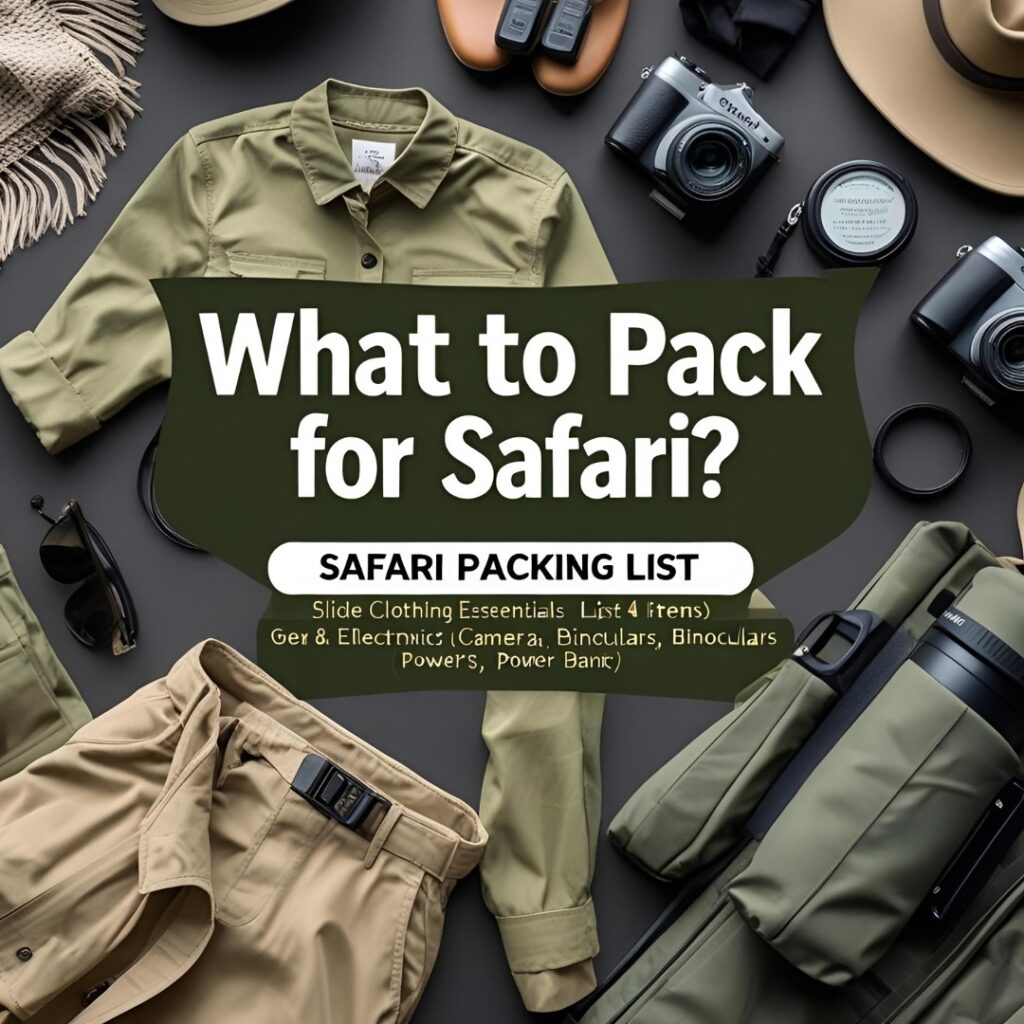
Quick answer: Pack lightweight, layered clothing in neutral colours (khaki, olive, beige), a warm layer for cold mornings, comfortable closed shoes, a hat, sunglasses, sunscreen, insect repellent, binoculars, a camera, and your travel documents. Most safari lodges offer laundry service, so you can pack light and re-wear clothes.
Knowing what to pack can make the difference between a comfortable Kenya safari and a stressful one. Mornings in the Maasai Mara, Amboseli or Lake Nakuru can be surprisingly cold, afternoons are warm, and evenings cool down again — so the golden rule is layers, not volume.
1. Safari Clothing
Choose lightweight, breathable fabrics that you can layer as the temperature shifts through the day.
- Lightweight T-shirts and long-sleeved shirts
- Comfortable trousers and a couple of pairs of shorts
- Underwear, socks and sleepwear
- Neutral, natural tones — khaki, beige, brown, olive — rather than bright colours
The Kenya Wildlife Service recommends adaptable, layerable clothing because temperatures swing between cool mornings and warm afternoons inside the parks and reserves.
2. A Warm Layer for Early Mornings
Early morning and evening game drives can be genuinely cold, even though Kenya is known for warm weather. A lightweight fleece, jacket or warm jumper you can add or remove as the day warms up is one of the most-used items on any safari.
3. Comfortable Footwear
You don’t need heavy hiking boots for a standard game-drive safari, but comfortable closed shoes matter for walking around camp and joining guided activities.
- Comfortable walking shoes or lightweight trainers
- Sandals for relaxing at the lodge
- Proper hiking shoes only if your itinerary includes a walking safari — ask your operator in advance
4. Sun and Insect Protection
The equatorial sun is strong, especially during long open-vehicle game drives.
- A wide-brimmed hat and sunglasses
- Sunscreen (SPF 30+)
- Insect repellent, particularly for evenings outdoors
- A lightweight long-sleeved layer for extra protection at dusk
5. Camera, Binoculars and Power
An African safari is one of the best places on earth for wildlife photography, so it’s worth packing properly for it.
- Camera with a zoom lens, extra memory cards and spare batteries
- Phone charger and a power bank — charging points can be limited at remote camps
- Binoculars, essential for spotting distant wildlife and birds
- A protective, dust-resistant camera bag
6. Health and Personal Items
Pack enough prescription medication for the full trip, plus a small first-aid kit with plasters, pain relief and any personal allergy medication. Speak with a qualified healthcare professional before travelling about vaccinations or malaria prevention, since recommendations depend on your itinerary.
- Sunscreen, lip balm, hand sanitiser and wet wipes
- A reusable water bottle
- A lightweight, packable rain jacket — better to have it and not need it
7. Travel Documents
Keep these organised, secured, and backed up with copies stored separately from the originals:
- Passport and visa or travel authorisation
- Flight details and travel insurance information
- Safari booking confirmation and emergency contacts
Kenya’s National Tourism Service Portal advises travellers to keep a copy of their passport and secure the original safely.
8. A Small Daypack
A lightweight daypack keeps your camera, binoculars, water bottle, sunscreen and hat within reach during game drives — choose one that’s comfortable and easy to carry in a vehicle.
Should You Pack Light for an African Safari?
Yes. Many light-aircraft transfers within Kenya and Tanzania enforce strict luggage limits, and a soft-sided bag is far easier to load into a safari vehicle or bush plane than a hard suitcase. Comfortable, practical clothing beats an oversized wardrobe every time — you do not need to buy new safari-specific outfits.
What to Avoid Packing
- Too many clothes or an oversized suitcase
- Expensive jewellery or valuables you don’t need
- Multiple pairs of shoes “just in case”
Complete African Safari Packing Checklist
Clothing: lightweight shirts, long-sleeved shirts, trousers, shorts, fleece or warm jacket, rain jacket, underwear, socks, sleepwear.
Footwear: walking shoes, trainers, sandals.
Safari essentials: hat, sunglasses, sunscreen, insect repellent, binoculars, camera, memory cards, batteries, power bank, water bottle, daypack.
Health: personal medication, first-aid kit, toiletries.
Documents: passport, visa, flight information, travel insurance, safari booking confirmation.
Frequently Asked Questions
What colours should you wear on an African safari?
Neutral, natural tones — khaki, beige, brown, olive green — are the practical choice for safari clothing and blend into the bush environment.
Do I need hiking boots for a Kenya safari?
Not for a standard game-drive safari. Comfortable closed shoes are enough unless your itinerary includes a walking safari, in which case ask your operator what footwear is recommended.
How many clothes should I pack for a 5-day safari?
Pack for roughly half the trip length and plan to reuse items — most lodges and camps offer next-day laundry service, so you rarely need a fresh outfit for every day.
Is a jacket necessary if Kenya is generally warm?
Yes. Early morning and evening game drives can be cold even in a warm climate, so a packable fleece or jacket is one of the most useful items in your bag.
Plan Your African Safari with Esther Luxe Safaris
Packing properly lets you relax and focus on what matters — Africa’s wildlife, landscapes and unforgettable moments. Whether you’re dreaming of the Big Five in Maasai Mara, elephants in Amboseli, or rhinos in Lake Nakuru, Esther Luxe Safaris can help you plan every detail.
Explore our Kenya safari tours and contact Esther Luxe Safaris to start planning your dream African safari.
Comments