
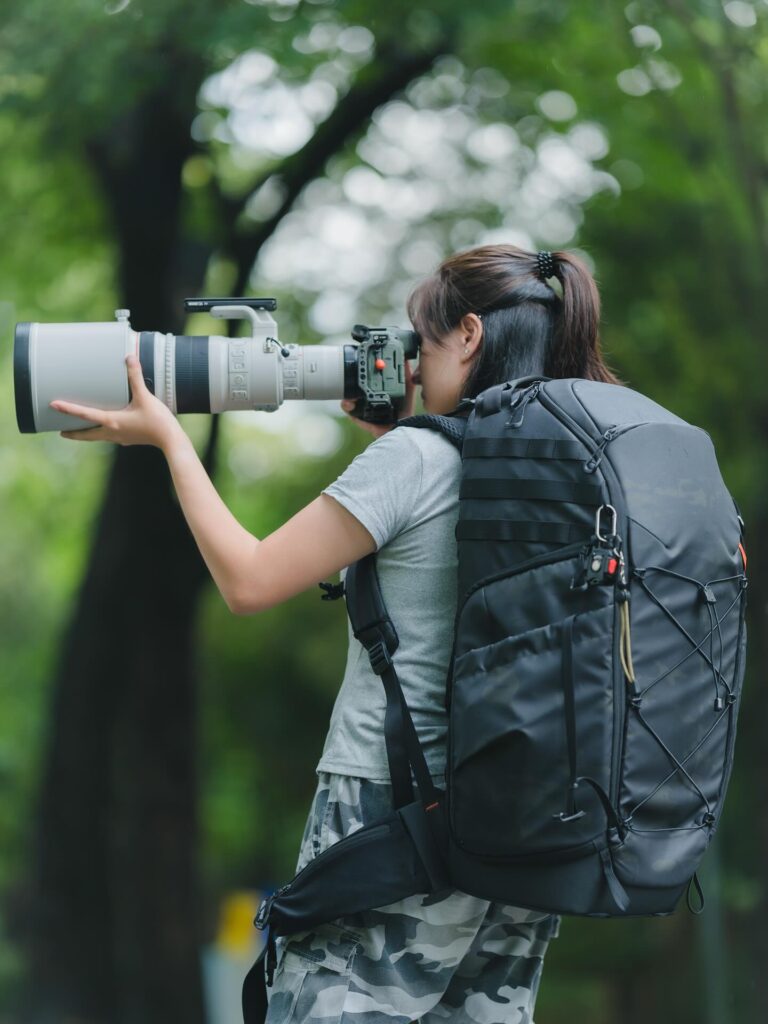

Quick answer: The best safari photos come from shooting in the early morning and late afternoon “golden hours,” using a zoom lens (200–400mm) for wildlife at a safe distance, and keeping your shutter speed fast (1/1000s or quicker) to freeze movement. A beanbag or window mount steadies shots from a moving vehicle far better than a tripod.
You don’t need professional gear to come home with great safari photos — just a few practical habits that make the most of the light and the wildlife in front of you.
Gear That Actually Helps
- A zoom lens in the 200–400mm range — wildlife is often further away than it looks
- A beanbag to rest your lens on the vehicle’s window frame or roof hatch, steadier than handholding
- Spare batteries and memory cards — charging points are limited at remote camps
- A dust-resistant camera bag — safari roads are dusty, especially in the dry season
Shoot in the Golden Hours
The hour after sunrise and before sunset gives warm, directional light that flatters both wildlife and landscapes — it also happens to be when animals are most active, so your best light and best sightings usually line up.
Camera Settings for Moving Wildlife
Use a fast shutter speed (1/1000s or faster) to freeze motion on running or flying subjects, continuous autofocus tracking if your camera has it, and burst mode to capture a sequence rather than a single frame — wildlife behaviour changes in an instant.
Composition Tips
Give moving animals space to “move into” within the frame rather than centring them, get down to eye level with your subject where possible, and don’t ignore the landscape — a lone acacia tree or dramatic sky can make as strong a photo as the animal itself.
Respect Wildlife While Shooting
Never ask your driver-guide to move closer than what’s safe or permitted, and avoid flash photography around animals, especially at night, as it can startle them. Your guide knows the safe distances — trust their positioning even if it means a slightly longer lens is needed.
Don’t Miss the Aerial Perspective
A hot air balloon safari over the Maasai Mara offers a completely different photographic vantage point — wide, sweeping shots of herds and landscape that aren’t possible from a vehicle.
Frequently Asked Questions
Do I need a professional camera for safari photography?
No — a mid-range mirrorless or DSLR with a decent zoom lens is enough for strong results; technique and light matter more than equipment.
What’s the best time of year for photography in the Maasai Mara?
July to October, during the Great Migration, offers dramatic action shots at river crossings alongside classic Big Five sightings.
Should I bring a tripod on safari?
A tripod isn’t practical inside a moving vehicle — a beanbag or window clamp works far better for stabilising shots.
Capture Your Own Safari with Esther Luxe Safaris
We can tailor game drive timing and vehicle positioning around photography, including dedicated photographic safaris. Contact Esther Luxe Safaris to start planning.