
What to Eat in Kenya: A Food Guide for Safari Travelers
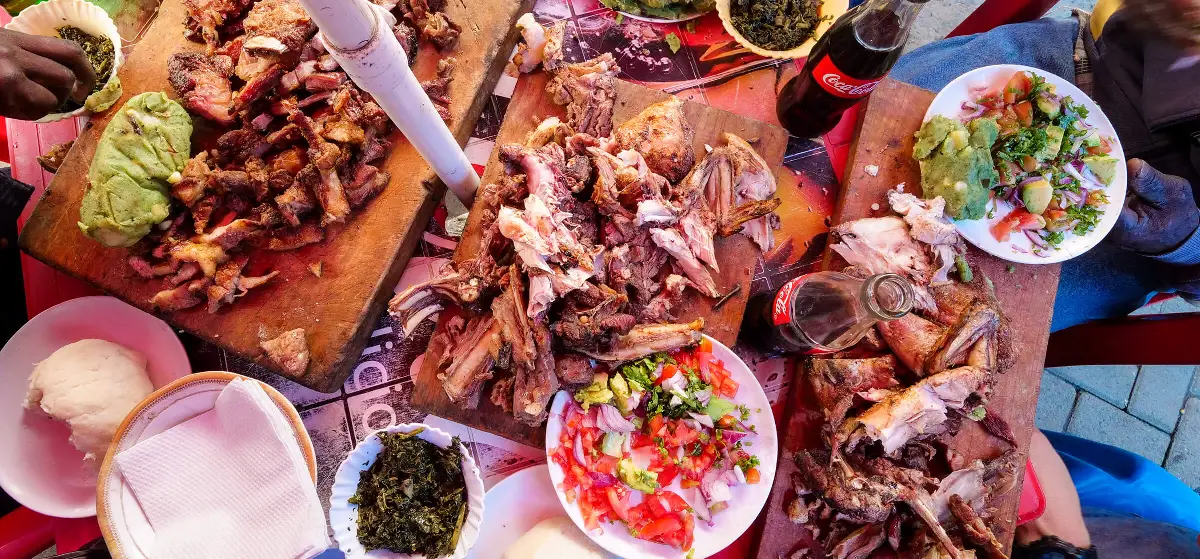
in Quick answer: Kenyan cuisine centers on nyama choma (grilled meat), ugali (a maize staple) served with vegetables and stews, and, on the coast, Swahili dishes built around coconut, spices and seafood. Most safari lodges and camps serve a mix of international and Kenyan dishes, so dietary needs are generally easy to accommodate.
Food is part of the safari experience, whether it’s a bush breakfast at sunrise on the Maasai Mara or a coastal seafood dinner after a day in Mombasa.
Nyama Choma — Kenya’s National Dish
Nyama choma, meaning “grilled meat,” is a Kenyan staple usually made with goat or beef, slow-grilled over charcoal and served simply with salt — a dish deeply tied to Kenyan social life and celebration, often shared communally at gatherings.
Ugali and Everyday Staples
Ugali, a firm maize-meal dough, is Kenya’s everyday staple, typically eaten with sukuma wiki (collard greens), beef or vegetable stew, and beans. It’s eaten by hand, torn into small pieces and used to scoop up accompanying dishes.
Swahili Coastal Cuisine
Around Mombasa and the coast, expect coconut-based curries, grilled fish, biryani and pilau rice — flavours shaped by centuries of Indian Ocean trade with Arabia, India and Persia, distinctly different from the simpler grilled and stewed dishes found inland.
Regional Variety Across Kenya
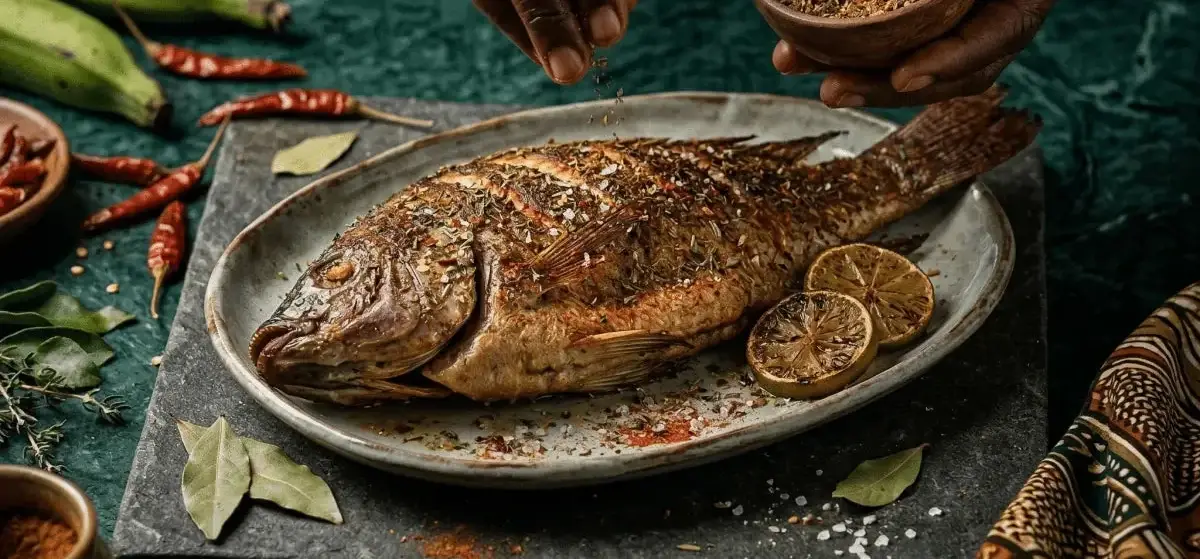
Food in Kenyan varies noticeably by region — fresh tilapia is a staple around Kisumu and Lake Victoria, while pastoralist communities in areas like Samburu traditionally rely more heavily on milk and meat than the maize-based diet common elsewhere in the country.
Kenyan Chai and Drinks
Kenyan chai, brewed strong with milk and spices, is a daily ritual across the country. Kenya is also one of the world’s major tea and coffee producers, both well worth trying at their source — many highland farms offer tastings and tours.
Street Food and Snacks
Popular Kenyan street foods include samosas, mandazi (a lightly sweet fried bread), roasted maize sold from carts, and mutura (a traditional sausage) — worth trying from busy, reputable vendors in cities and towns.
Kenyan Fruit and Fresh Produce
Kenya’s markets overflow with fresh mangoes, avocados, passion fruit and bananas year-round, thanks to the country’s varied climate zones — from the humid coast to the cooler highlands around Nairobi. Roadside fruit stalls are common on longer safari transfers and worth a stop for genuinely fresh produce.
Coffee and Tea Country
The highlands around Mount Kenya and the Rift Valley produce some of the world’s most sought-after coffee and tea, and several farms and estates offer tours explaining the full process from picking to cup — a worthwhile stop if your itinerary passes through the central highlands.
What You’ll Eat on Safari
Most lodges and camps serve buffet-style meals mixing international dishes with Kenyan flavours, and can accommodate vegetarian, vegan and other dietary requirements with advance notice — just let us know when booking.
Dining at Safari Camps and Lodges
Most mid-range and luxury camps take real pride in their food, often pairing a la carte dinners or bush breakfasts with the same attention to detail as their game drives — candlelit dinners under the stars and sundowner snacks overlooking a waterhole are common touches at nicer properties. Meals are typically included in your safari package, covered in more detail in our safari cost guide.
Food Safety Tips for Travellers
Stick to bottled or filtered water throughout your trip, even when brushing your teeth in more remote areas, and ease into unfamiliar foods gradually rather than sampling everything on day one — simple precautions that apply to travel anywhere, not just Kenya. None of this should discourage you from trying local dishes — nyama choma, ugali and freshly grilled fish are core parts of a Kenya trip, and most travellers who follow basic precautions eat extremely well without any issues at all. If you have any dietary restrictions or particular curiosity about a regional dish, tell your guide — they’re usually happy to arrange a stop at a local spot along the way rather than sticking strictly to lodge dining every meal.
Frequently Asked Questions
Is Kenyan food spicy?
Generally mild inland, with more spice in Swahili coastal dishes — spice levels can usually be adjusted on request.
Are vegetarian options available on safari?
Yes — most camps and lodges cater well to vegetarian and vegan travellers if you let us know in advance.
Is street food safe to eat in Kenya?
Stick to busy, reputable stalls with good turnover, and use the same general food-safety judgement you would in any travel destination.
What should I tip restaurant staff in Kenya?
A similar approach to safari tipping applies — see our full tipping guide for general norms.
Plan Your Kenya Safari with Esther Luxe Safaris
We handle dietary requests as part of your trip planning. Follow us on Instagram for food and safari highlights, or contact us to start planning your safari.