Month-by-Month Guide to the Great Wildebeest Migration in Kenya
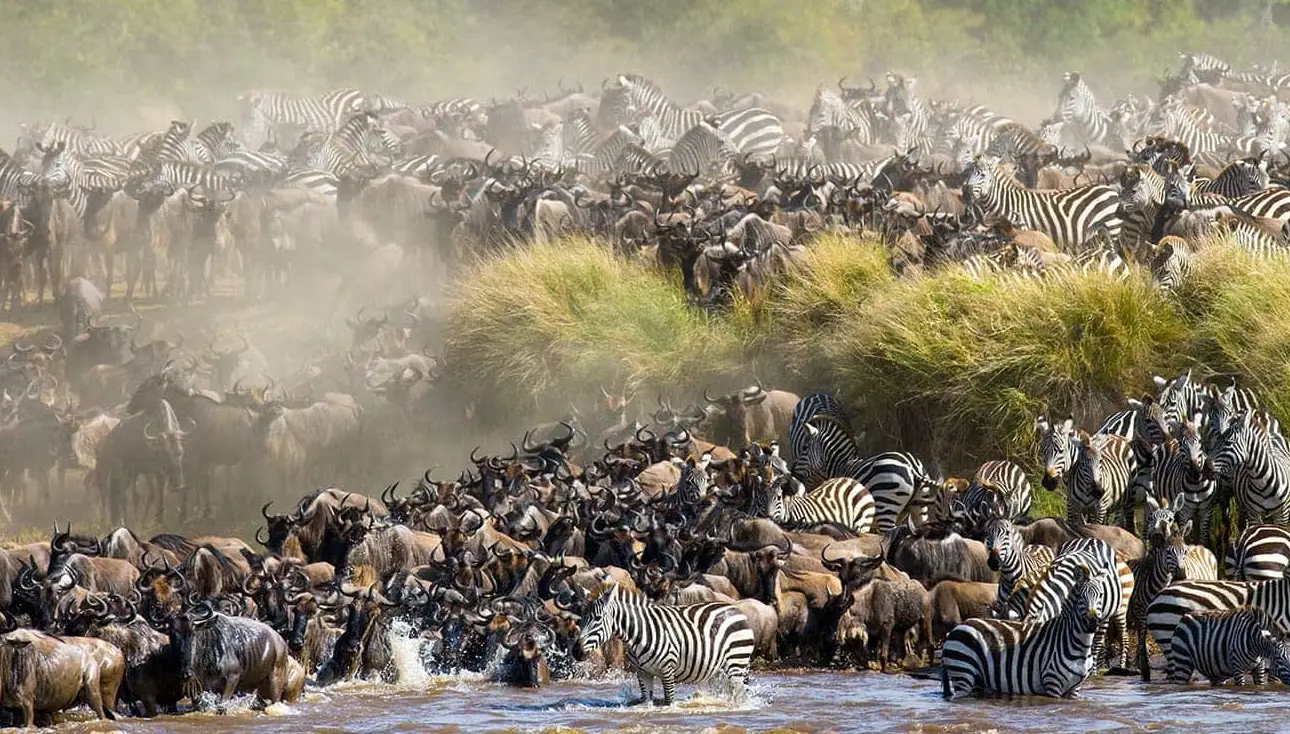
Quick answer: The Wildebeest Migration in Kenya is a year-round, circular movement of over a million wildebeest and hundreds of thousands of zebra through the Serengeti-Mara ecosystem, not a single event on a fixed date. Herds are typically present in the Maasai Mara from around July through October, with the dramatic Mara River crossings most likely between late July and September. Exact timing shifts every year based on rainfall.
The Wildebeest Migration in Kenya is not a single dash across the plains. It is a continuous, weather-driven cycle that moves through Tanzania and Kenya in search of fresh grazing. This month-by-month guide shows what to expect on the Kenyan side, so you can time your safari with confidence.
What Drives the Wildebeest Migration in Kenya
Rainfall, not a calendar, drives the entire migration. Wildebeest follow the growth of fresh grass, which follows the rain. Because weather shifts from year to year, migration timing shifts too. The Serengeti and Mara together form one continuous ecosystem, and the herds simply move where the grazing is best.
January to March: Southern Serengeti, Tanzania
During this period, herds gather on the short-grass plains of the southern Serengeti to calve, well south of the Kenyan border. Hundreds of thousands of calves are born within a few short weeks, which draws predators from across the plains. This is not prime migration-viewing time in Kenya. However, the Maasai Mara still delivers strong resident wildlife year-round, including the big cats it is famous for.
April to May: Central and Western Serengeti
As the dry season approaches, herds begin moving north and west through the Serengeti, still largely inside Tanzania. This period lines up with Kenya’s long rains, which can leave some Mara roads muddy. In exchange, the rains bring lush, green scenery to the reserve, and fewer tourists mean lower rates at many camps.
June: Approaching the Kenyan Border
By June, herds are typically moving through the northern Serengeti and the Grumeti area, edging closer to the Mara ecosystem. Some early arrivals may reach the Mara’s southern conservancies toward the end of the month. Camps often see a noticeable jump in bookings as travellers anticipate the coming peak season.
July to September: Peak Wildebeest Migration in Kenya
This window is generally the best time for migration viewing in Kenya. Large herds spread across the Mara, and dramatic Mara River crossings happen throughout these months. Crossings are unpredictable, and they can occur at any time of day. Patience and time in the field improve your odds of witnessing one. Our best time to visit Kenya guide covers this peak window alongside the rest of the year.
October: Herds Begin Moving South
Herds typically start drifting south toward the Serengeti as the Mara’s grazing thins out and Tanzania’s short rains begin. Good sightings remain common through this month, though numbers gradually decline as the herds move on.
November to December: Return to the Serengeti
By this point, most herds have moved back into Tanzania, heading toward the southern plains ahead of the next calving season. The Mara returns to its excellent year-round resident wildlife, without the added numbers the migration brings.
Best Areas Within the Mara for River Crossings
The Mara River’s main crossing points, particularly around Lookout Hill and the Mara Triangle, tend to see the most crossing activity during peak months. Conservancies bordering the reserve, such as those in the greater Mara ecosystem, also see excellent herd movement with far fewer vehicles. Our national parks vs conservancies guide explains how conservancy stays can improve your crossing odds.
How to Plan Your Trip Around the Wildebeest Migration in Kenya
Booking a Mara stay within the broader July to October window, with some flexibility on dates, gives you the best overall chance of a strong migration experience. Peak-season camps sell out six to twelve months in advance, so plan early if you are targeting August or September specifically.
Staying multiple nights also improves your odds, since river crossings are impossible to predict on any single day. Many guests choose a Mara stay of four nights or more during peak season for exactly this reason. If your trip includes the Serengeti as well, our Maasai Mara vs Serengeti guide compares both sides of the ecosystem.
What to Pack and Expect During Migration Season
Peak season brings warm, dry days and cool mornings, so layers work best. Dust is common on game drives, and roads can be busy near popular crossing points. Bring a good camera, binoculars, sunscreen and a hat, and check our safari packing list for a full checklist.
Because migration season is the Mara’s busiest period, book camps and flights well ahead, and confirm your driver-guide’s experience with river crossings specifically. A guide who knows the herd patterns and crossing points can make the difference between a distant view and a front-row seat.
Frequently Asked Questions
What is the single best month to see a river crossing?
August and September are generally considered the strongest months for river crossings. However, sightings anywhere within the July to October window can also be excellent, depending on that year’s rainfall.
Can I see the Wildebeest Migration in Kenya outside July to October?
Not the river-crossing spectacle specifically, since herds are usually in Tanzania during other months. However, the Mara offers strong resident wildlife viewing year-round, regardless of migration timing.
Is the migration guaranteed if I visit in peak season?
No sighting in nature is ever guaranteed. However, visiting during July to September gives you the highest likelihood of encountering large herds and crossings, based on typical patterns.
Does the Wildebeest Migration in Kenya also involve zebra?
Yes. Large numbers of zebra, and some gazelle, move alongside the wildebeest for much of the migration. Zebra often arrive slightly ahead of the main wildebeest herds, since they favour taller grass.
Plan Your Kenya Safari with Esther Luxe Safaris
Want help timing your trip around the Wildebeest Migration in Kenya? Contact our safari specialists, and we will build an itinerary around the best window for your travel dates. You can also browse our 4-Day Group Joining Great Migration Safari or explore all safari packages.